
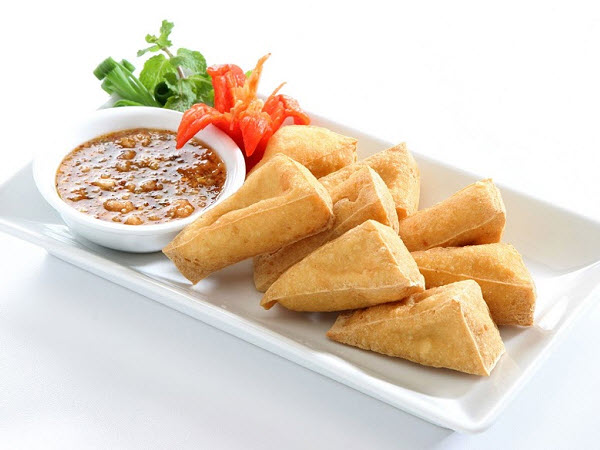
In the vibrant heart of Hanoi, where the Old Quarter’s bustling alleys hum with the chatter of vendors and the serene waters of Hoan Kiem Lake reflect the city’s timeless charm, a humble ingredient takes center stage: tofu. Known as đậu phụ in Vietnamese, this soft, creamy staple is a cornerstone of Vietnam’s culinary heritage, offering a versatile canvas for dishes from silky soups to crispy stir-fries. In Hanoi, where northern cuisine celebrates light, savory, and herb-driven flavors, tofu shines in markets like Dong Xuan and street stalls, transforming simple meals into nourishing feasts. From its ancient origins in China to its integral role in Vietnam’s kitchens, tofu’s journey is a story of resilience, adaptability, and community, cherished for its mild flavor and remarkable health benefits. Across Vietnam, from the spicy tofu curries of Central Vietnam to the coconut-infused dishes of the Mekong Delta, tofu reflects the country’s diverse culinary landscape. Join us on a journey through the art of how to make tofu, exploring its history, production, and culinary legacy, with a nod to Viet Rice Essence Restaurant and Viet Rice Kitchen Cooking Class, where you can savor Hanoi’s tofu-inspired flavors in the heart of the capital.
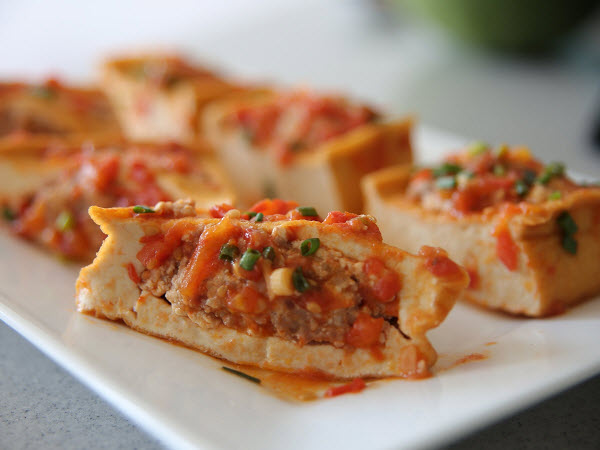
The Story of Tofu in Hanoi: A Monk’s Nourishment
In a quiet Hanoi pagoda, centuries ago, a Buddhist monk named Thầy Minh tended the temple’s garden, where soybeans grew in neat rows under the morning sun. Guided by tales of Chinese monks who crafted a creamy curd from soy, Thầy Minh sought a nourishing food to sustain his community during meatless days. “The soybean is a gift,” he’d say, grinding beans into milk for his first batch of tofu. “It feeds both body and soul.” His creation, soft and delicate, became a temple staple, served in simple soups with herbs, its mild flavor a canvas for Hanoi’s northern cuisine.
Thầy Minh’s tofu spread beyond the pagoda, reaching Hanoi’s Old Quarter markets, where vendors began crafting đậu phụ for daily meals. During lean times, when meat was scarce, tofu became a lifeline, its affordability and versatility feeding families across the city. Thầy Minh’s đậu phụ xào sả (tofu stir-fry with lemongrass) became a village favorite, shared at communal feasts under banyan trees. His techniques—soaking beans, curdling milk, pressing curds—were passed down through generations, shaping Hanoi’s culinary heritage. Today, Thầy Minh’s legacy thrives in Hanoi’s markets and stalls, where tofu remains a beloved ingredient, connecting the city to its Buddhist roots and the soybean’s enduring nourishment.
Why Tofu is Popular in Hanoi
Tofu is wildly popular in Hanoi for its creamy texture, versatile flavor, and deep cultural resonance, captivating locals and travelers alike. Its appeal lies in its ability to absorb the vibrant flavors of Hanoi’s northern cuisine, from the tangy fish sauce in đậu phụ sốt cà chua (tofu in tomato sauce) to the aromatic lemongrass in đậu phụ xào sả ớt (tofu stir-fry with chili). Tofu’s soft, silky consistency or crispy fried exterior makes it a perfect addition to soups, stir-fries, and salads, complementing Hanoi’s herb-driven dishes.
The cultural significance of tofu fuels its popularity. In Hanoi, tofu is a symbol of Buddhist compassion, often served at pagodas during full-moon days and Tet to honor meatless traditions. Its role as a protein-rich staple during times of scarcity reflects Hanoi’s resilience, making it a cherished ingredient in northern cuisine. Markets like Dong Xuan and Hang Be brim with fresh tofu blocks, tying Hanoi’s food culture to its agrarian roots and Buddhist heritage.
Affordability is a key driver. Tofu costs as little as 10,000 VND (US$0.40) per block at markets, making dishes like canh đậu phụ (tofu soup) (20,000 VND/US$0.80) and đậu phụ rán (fried tofu) (30,000 VND/US$1.20) accessible to all, from street vendors to home cooks. Its versatility—used fresh, fried, or fermented in countless dishes—ensures its place in Hanoi’s street food stalls, restaurants, and family kitchens.
The health benefits of tofu, explored below, further boost its appeal. Low in calories and rich in protein, calcium, and iron, tofu aligns with Hanoi’s wellness-focused dining trends, attracting health-conscious diners. Its mild flavor and adaptability make it a culinary chameleon, celebrated in Hanoi’s vibrant food scene.
Why Tofu Promotes Healthy Eating
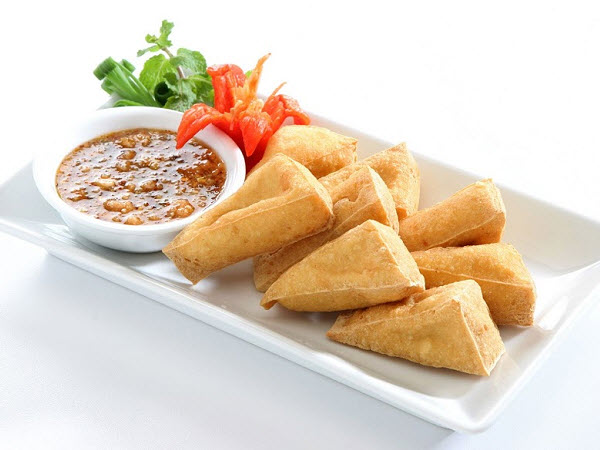
Tofu is a nutritional powerhouse, contributing to Hanoi’s reputation for wholesome cuisine. Here’s why it promotes healthy eating, rooted in its properties and culinary applications:
- Low-Calorie, High-Protein: Tofu is low in calories (70 per cup) and high in plant-based protein (10 grams per cup), supporting muscle repair, satiety, and energy, ideal for vegetarian and health-conscious diets in Hanoi.
- Heart-Healthy Nutrients: Rich in calcium (350 mg per cup) and iron (3 mg per cup), tofu promotes bone and blood health. Its unsaturated fats (4 grams per cup) support heart health, reducing cholesterol levels compared to red meats.
- Antioxidant and Anti-Inflammatory: Tofu contains isoflavones, antioxidants that combat inflammation and may reduce the risk of chronic diseases like heart disease and cancer, enhancing its appeal in Hanoi’s wellness scene.
- Low-Fat, Gluten-Free: Naturally low in saturated fat (0.5 grams per cup) and gluten-free, tofu suits low-fat and gluten-intolerant diets, ensuring accessibility for diverse diners.
- Digestive and Hydrating: Tofu’s high water content (85%) promotes hydration, while its fiber (1 gram per cup) aids digestion, making it a gentle addition to Hanoi’s light, herb-driven dishes.
- Versatile and Balanced: Tofu’s neutral flavor absorbs spices and herbs, allowing low-sugar, low-salt preparations like đậu phụ xào sả, providing balanced macronutrients—protein, minimal fats, and carbohydrates when paired with rice or noodles.
These health benefits resonate with Hanoi’s modern diners, who seek nutrient-dense, flavorful ingredients that support wellness. Tofu’s low-calorie, high-protein profile and antioxidant richness make it a healthy cornerstone of Hanoi’s cuisine, enhancing its popularity in markets and eateries.
The Cultural Significance of Tofu in Hanoi
Tofu is a cultural treasure in Hanoi, embodying the city’s northern heritage and Buddhist principles of compassion. Rooted in Vietnam’s agrarian history, tofu sustained communities during lean times, as cooks like Thầy Minh used soybeans to create affordable, nourishing dishes. Its role in Buddhist traditions, served at pagodas during full-moon days and Tet, reflects Hanoi’s spiritual connection to meatless meals, symbolizing purity and mindfulness.
In the Old Quarter, stalls serve tofu dishes like đậu phụ rán and canh đậu phụ, tying diners to Hanoi’s history, while Hoan Kiem District’s eateries offer refined versions, showcasing its versatility. During Tet, tofu appears in vegetarian feasts, uniting families with its creamy texture and subtle flavor. Markets like Dong Xuan brim with fresh tofu, their affordability (10,000 VND/US$0.40 per block) ensuring accessibility. Tofu’s role in Hanoi’s northern cuisine—light, savory, and herb-driven—makes it a cherished emblem of the city’s identity, celebrated by locals and tourists seeking authentic, plant-based flavors.
A Tale of Tofu in Hanoi: The Market’s Bounty
In the bustling chaos of Hanoi’s Hang Be Market, Bà Hoa tends her stall, her hands slicing fresh tofu blocks as dawn breaks over the city. Decades ago, as a young girl, she followed her mother through the market’s maze, learning to select the smoothest soybeans for đậu phụ during Hanoi’s post-war years. “Tofu is our strength,” her mother would say, frying golden cubes for đậu phụ rán to feed their family. Bà Hoa vowed to share this gift with her community.
Her tofu stall became a market legend, with locals lining up for her đậu phụ sốt cà chua, its creamy tofu and tangy tomato sauce a comforting staple. During Tet, she crafted vegetarian canh đậu phụ for Buddhist neighbors, its simplicity uniting families. Bà Hoa taught her daughters to grind soybeans at Dong Xuan Market, passing down recipes that balanced texture and flavor. Her legacy fuels Hanoi’s culinary scene, from Old Quarter stalls to Hoan Kiem District restaurants, where tofu remains a beloved ingredient, nourishing the city with resilience and tradition.
Origins of Tofu
Tofu, or soybean curd, originated in China over 2,000 years ago, traditionally attributed to Han Dynasty prince Liu An, who is said to have discovered it while experimenting with soy milk and coagulants. It spread to Vietnam via Chinese cultural exchanges, becoming a staple in Buddhist monasteries by the 10th century due to its plant-based protein. In Hanoi, tofu was embraced as a meat substitute during times of scarcity, its mild flavor and creamy texture aligning with northern Vietnam’s light, savory cuisine. By the Ly Dynasty (11th–13th centuries), tofu was a common food in northern Vietnam, integrated into soups, stir-fries, and vegetarian dishes, reflecting Chinese techniques adapted to local ingredients like fish sauce and lemongrass.
How to Make Tofu at Home
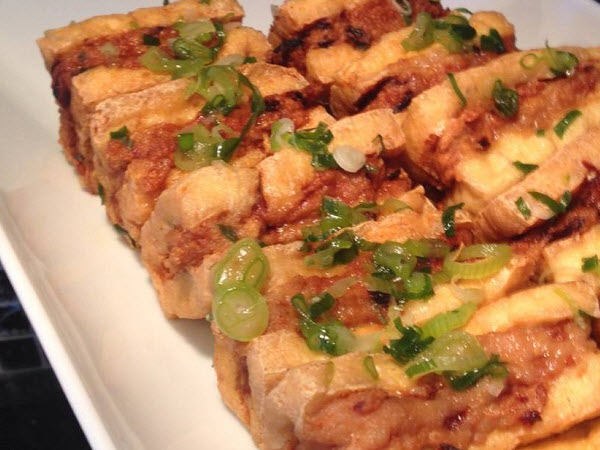
Making tofu at home is a rewarding process that transforms simple soybeans into a versatile, creamy curd. Here’s a step-by-step guide to crafting tofu, inspired by Hanoi’s traditional methods:
- Soak the Soybeans (8–12 hours):
- Ingredients: 2 cups dried soybeans, water.
- Rinse 2 cups of dried soybeans under cold water to remove debris.
- Place soybeans in a large bowl, cover with 6 cups of water, and soak for 8–12 hours (overnight) until softened and doubled in size.
- Tip: Use high-quality, non-GMO soybeans for best flavor, available at Asian markets or Hanoi’s Dong Xuan Market.
- Grind the Soybeans (15 minutes):
- Drain soaked soybeans and blend with 6 cups of fresh water in a high-powered blender until smooth, creating a thick, white soy pulp.
- Strain the pulp through a cheesecloth or nut milk bag into a large pot, squeezing to extract soy milk. Reserve the pulp (okara) for other recipes like stir-fries.
- Tip: Blend in batches if needed to ensure a fine consistency, mimicking Hanoi’s traditional hand-grinding.
- Cook the Soy Milk (20 minutes):
- Heat the soy milk over medium heat, stirring constantly to prevent scorching, until it reaches a gentle boil (about 185°F/85°C).
- Reduce heat and simmer for 5–7 minutes to remove raw soy flavor, skimming off any foam that forms.
- Tip: Use a heavy-bottomed pot to avoid burning, a technique used in Hanoi’s tofu-making households.
- Curdle the Milk (10 minutes):
- Coagulant: 1 tsp nigari (magnesium chloride) or 2 tbsp lemon juice, dissolved in ¼ cup warm water.
- Remove soy milk from heat and slowly stir in the coagulant, mixing gently for 5 seconds. Let sit undisturbed for 5–10 minutes until curds form and separate from the whey (clear liquid).
- Tip: Nigari, available at Asian markets, produces a smoother tofu, while lemon juice adds a slight tang, common in Hanoi’s home kitchens.
- Press the Curds (30–60 minutes):
- Line a tofu mold (or perforated container) with cheesecloth and ladle the curds into it, folding the cloth over the top.
- Place a weight (e.g., a can or plate) on top to press out excess whey, pressing for 30 minutes for soft tofu or 60 minutes for firm tofu.
- Tip: Adjust pressing time for desired texture; Hanoi’s đậu phụ is often medium-firm for versatility.
- Store and Use:
- Remove tofu from the mold, unwrap, and store in a container with water in the refrigerator for up to 5 days, changing the water daily.
- Use in Hanoi dishes like canh đậu phụ or đậu phụ xào sả ớt, or enjoy fresh with soy sauce.
- Yield: 2 cups soybeans yield about 1 lb of tofu, enough for 4–6 servings.
This process, rooted in Hanoi’s traditional techniques, ensures fresh, creamy tofu perfect for northern Vietnamese recipes.
Popular Tofu Dishes in Vietnam
Tofu is a versatile ingredient in Vietnamese cuisine, featured in a variety of dishes across regions. Below are six popular tofu dishes from Northern, Central, and Southern Vietnam, with recipes and significance.
1. Canh Đậu Phụ (Tofu Soup) – Hanoi, Northern Vietnam
Description: A light Hanoi soup, canh đậu phụ combines soft tofu with herbs and tomatoes in a savory broth, often served with rice.
Recipe (Serves 4):
- Ingredients: 1 block soft tofu (cubed), 2 tomatoes (wedged), 4 cups vegetable broth, 2 tbsp fish sauce, 1 tsp ginger (minced), cilantro, green onions, chili.
- Instructions: Simmer broth with fish sauce and ginger for 10 minutes. Add tomatoes and tofu, cooking for 5 minutes. Garnish with cilantro, green onions, and chili. Serve hot with rice.
- Significance: A northern staple, this soup reflects Hanoi’s love for simple, nourishing dishes, popular at family meals and Buddhist gatherings.
2. Đậu Phụ Xào Sả Ớt (Tofu Stir-Fry with Lemongrass and Chili) – Hanoi, Northern Vietnam
Description: A fragrant Hanoi stir-fry, đậu phụ xào sả ớt pairs fried tofu with lemongrass and chili, showcasing its crisp texture.
Recipe (Serves 4):
- Ingredients: 1 block firm tofu (cubed, fried), 2 tbsp lemongrass (minced), 1 chili (sliced), 2 tbsp soy sauce, 1 tbsp oil, green onions.
- Instructions: Heat oil in a wok, sauté lemongrass and chili until fragrant. Add tofu, stir-fry with soy sauce for 5 minutes. Garnish with green onions. Serve with rice.
- Significance: A northern favorite, this dish highlights Hanoi’s vegetarian-friendly cuisine, affordable and flavorful.
3. Đậu Phụ Sốt Cà Chua (Tofu in Tomato Sauce) – Hanoi, Northern Vietnam
Description: A comforting Hanoi dish, đậu phụ sốt cà chua features tofu in a tangy tomato sauce, often paired with rice.
Recipe (Serves 4):
- Ingredients: 1 block firm tofu (cubed, fried), 2 tomatoes (chopped), 1 garlic clove (minced), 2 tbsp fish sauce, 1 tbsp oil, green onions.
- Instructions: Heat oil, sauté garlic and tomatoes until soft. Add fish sauce and tofu, simmering for 5 minutes. Garnish with green onions. Serve with rice.
- Significance: A northern classic, this dish reflects Hanoi’s love for balanced, savory flavors, popular in home kitchens.
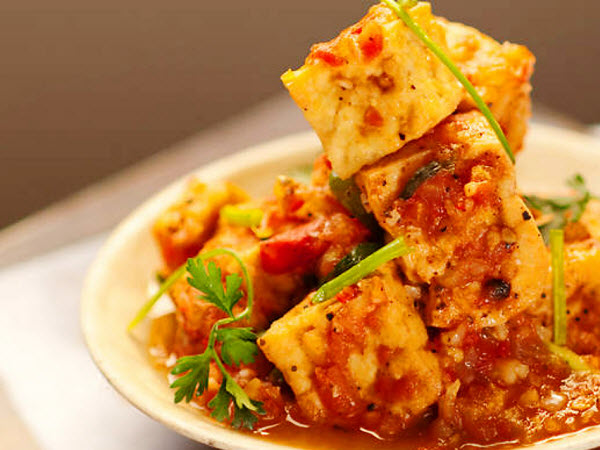
4. Đậu Phụ Kho Tương (Braised Tofu in Fermented Soybean Paste) – Hue, Central Vietnam
Description: A bold Hue dish, đậu phụ kho tương braises tofu in fermented soybean paste, offering a spicy, umami-rich flavor.
Recipe (Serves 4):
- Ingredients: 1 block firm tofu (cubed), 2 tbsp fermented soybean paste, 1 tbsp chili paste, 1 tbsp sugar, 1 cup water, shallots, chili.
- Instructions: Simmer water with soybean paste, chili paste, and sugar for 5 minutes. Add tofu, braising for 10 minutes. Garnish with shallots and chili. Serve with rice.
- Significance: A Central Vietnam icon, this dish showcases Hue’s spicy, complex cuisine, popular in local markets.
5. Đậu Phụ Nhồi (Stuffed Tofu with Vegetables) – Southern Vietnam
Description: A Mekong Delta specialty, đậu phụ nhồi stuffs tofu with vegetables and mushrooms, fried or steamed for a tropical twist.
Recipe (Serves 4):
- Ingredients: 1 block firm tofu (cut into squares, hollowed), ½ cup mushrooms (chopped), ½ cup carrots (shredded), 2 tbsp soy sauce, 1 tbsp oil, cilantro.
- Instructions: Mix mushrooms, carrots, and soy sauce, stuff into tofu squares. Fry in oil for 5 minutes or steam for 10 minutes. Garnish with cilantro. Serve with rice.
- Significance: A Southern favorite, this dish reflects the Delta’s vibrant, vegetable-rich cuisine, popular at markets like Ben Thanh.
6. Lẩu Đậu Phụ (Tofu Hot Pot) – Southern Vietnam
Description: A communal Mekong Delta dish, lẩu đậu phụ is a vegetarian hot pot with tofu, mushrooms, and greens in a savory broth.
Recipe (Serves 4):
- Ingredients: 1 block soft tofu (cubed), 1 cup mushrooms, 2 cups water spinach, 4 cups vegetable broth, 2 tbsp soy sauce, 1 tsp ginger (minced), cilantro, chili.
- Instructions: Simmer broth with soy sauce and ginger for 10 minutes. At the table, cook tofu, mushrooms, and spinach in broth. Garnish with cilantro and chili. Serve with rice noodles.
- Significance: A Southern staple, this hot pot showcases the Delta’s communal dining and tropical ingredients, popular at family gatherings.
These dishes highlight Vietnam’s culinary diversity, from Hanoi’s light, savory soups and stir-fries to Hue’s bold, spicy braises and the Delta’s vibrant, tropical hot pots and stuffed tofu, each showcasing tofu’s versatility.
Hanoi: A Tofu Culinary Haven
Hanoi’s culinary scene is a global draw, with its markets, stalls, and eateries showcasing tofu in dishes like canh đậu phụ and đậu phụ xào sả ớt. Markets like Dong Xuan and Hang Be brim with fresh tofu, their affordability (10,000 VND/US$0.40 per block) ensuring accessibility. Hanoi’s festivals, like Tet and full-moon days, celebrate tofu in vegetarian feasts, making the city a haven for food lovers seeking authentic, plant-based flavors. Tofu’s role in Hanoi’s street food and restaurants underscores its enduring appeal, inviting locals and travelers to savor its creamy versatility.
Exploring Hanoi’s Culinary Neighborhoods
Hanoi’s tofu culture thrives across its neighborhoods:
- Old Quarter: Home to stalls serving đậu phụ rán and canh đậu phụ, bustling with vendors and street food.
- Hoan Kiem District: Offers eateries with refined tofu dishes near Hoan Kiem Lake.
- Dong Da District: Known for quieter stalls with xôi and tofu soups.
- Tay Ho District: Features trendy eateries with vegetarian tofu options.
- Ba Dinh District: Home to stalls near historic sites, offering đậu phụ sốt cà chua and stir-fries.
Hoan Kiem District, where Viet Rice Essence is located, is ideal for savoring Hanoi’s tofu-inspired cuisine, bridging market vibrancy with culinary excellence.
VietRice Essence Restaurant & Viet Rice Kitchen Cooking Class
Your gateway to authentic Vietnamese culinary traditions
https://vietriceessence.com/
http://vietricekitchen.com/
